Honestly, I paused. Not because I didn’t know the technical differences — I do — but because the answer isn’t neat. It isn’t black and white. And it certainly isn’t the same for everyone.
I’ve worked around jewellery long enough to see trends come and go. I’ve watched tastes shift, budgets stretch, values evolve. What used to be a simple “diamond or nothing” conversation has turned into something far more interesting. People are asking why. They want to know where stones come from, how they’re made, what they really cost, and whether that sparkle on the finger matches their life, not just tradition.
So let’s talk about it properly. No sales pitch. No hype. Just a grounded, human look at moissanite and diamonds — and why neither choice is as straightforward as Instagram makes it seem.
Table of Contents
The Question Isn’t New — But the Context Is
Diamonds have ruled the engagement ring world for over a century. That’s not an accident. Clever marketing, rarity narratives, and a strong emotional hook locked them into our collective imagination. For decades, proposing without a diamond felt… wrong. Or at least unconventional.
But something’s shifted. And you can feel it when couples walk into a store today.
They’re more informed. More sceptical. Sometimes more budget-conscious, sometimes just value-driven. They ask about ethics. They ask about longevity. They ask whether anyone can really tell the difference across a dinner table. And increasingly, they ask about alternatives — especially moissanite.
Well, you might not know this, but moissanite wasn’t even created to replace diamonds. It was discovered accidentally in the late 1800s, mistaken for diamond fragments from a meteor crater. Romantic, right? These days, of course, moissanite is lab-created, consistent, and intentionally designed to mimic — and in some ways outperform — diamonds.
Which brings us to the real comparison.
Appearance: Sparkle, Fire, and That “Wow” Factor
Let’s start with what everyone notices first: how it looks.
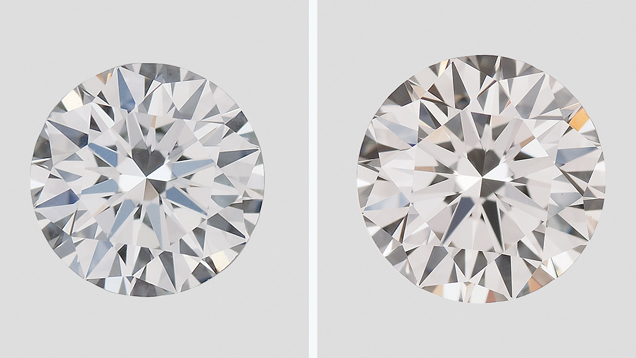
Diamonds are known for their white brilliance — sharp flashes of light that feel crisp and classic. When cut well, they have a balanced sparkle that’s unmistakably “diamond” to trained eyes.
Moissanite, on the other hand, is a show-off. It has more fire, meaning it throws more rainbow flashes under light. Some people love this. Others feel it’s too much. I’ve had clients say moissanite looks “disco-ball sparkly” under spotlights, while diamonds feel calmer, more understated.
Neither is wrong. It comes down to taste.
What surprises many people is that to the untrained eye, especially in everyday settings, the difference is subtle. Across a café table or during a night out, most people simply see a beautiful stone. Full stop.
Durability: Everyday Wear Matters More Than You Think
Engagement rings aren’t ornaments. They’re worn while carrying groceries, typing emails, cleaning benches, wrangling kids. Durability isn’t a bonus — it’s essential.
Diamonds score a perfect 10 on the Mohs hardness scale. They’re the hardest natural material on earth. That’s not marketing fluff; it’s geology. They resist scratching better than anything else used in jewellery.
Moissanite isn’t far behind, sitting at 9.25. In real life terms? That’s still incredibly hard. It won’t scratch easily. It’s suitable for daily wear. It won’t cloud or dull over time if cared for properly.
I’ve seen both stones last beautifully for years. Chips and damage usually come down to setting quality and lifestyle, not the stone itself.
Price: The Conversation Nobody Wants to Start — But Everyone Needs
Here’s where things get real.
Diamonds are expensive. Even smaller stones can carry hefty price tags, especially if you’re chasing high clarity, colour, and cut. And natural diamonds, in particular, hold onto a premium driven by supply control and tradition as much as intrinsic value.
Moissanite? Significantly more affordable. Sometimes dramatically so.
This doesn’t mean moissanite is “cheap” in a negative sense. It means you’re not paying for rarity narratives or mining scarcity. You’re paying for craftsmanship, cutting, and material — not marketing legacy.
I’ve watched couples redirect savings from choosing moissanite into weddings, homes, travel, or simply peace of mind. And honestly? That practicality resonates with a lot of Australians right now.
Ethics and Origins: A Bigger Factor Than It Used to Be
A decade ago, ethical sourcing was a niche concern. Today, it’s front and centre.
Traditional diamond mining has a complicated history. While regulations have improved, concerns around environmental impact and labour practices haven’t disappeared entirely.
Moissanite, being lab-created, sidesteps many of these issues. There’s no mining, no displacement of land, no murky supply chains.
Then there’s the growing category of lab made diamonds, which blur the line even further. Chemically and optically identical to natural diamonds, these stones offer the same hardness and appearance without the mining footprint. They’ve opened the door for buyers who want “a real diamond” without the ethical baggage.
If you’re curious about how global interest in lab-grown stones is evolving, this piece on lab made diamonds offers an interesting international perspective.
Resale and Perceived Value: Let’s Be Honest
This is the part where expectations need managing.
Diamonds, despite what old ads suggest, are not great investments. Resale values are often lower than people expect unless the stone is exceptional. Still, diamonds tend to retain more resale value than moissanite simply because of market demand and perception.
Moissanite has minimal resale value. That’s not a flaw — it’s a reality. Most people don’t buy engagement rings planning to sell them. But it’s worth knowing upfront.
If long-term monetary value matters to you, that may influence your decision. If emotional value is king, resale often fades into irrelevance.
Social Perception: Does Anyone Actually Care?
Short answer? Less than you think.
Once upon a time, diamond status mattered. These days, conversations have shifted. People ask why you chose what you chose, not how much it cost.
Some still prefer the tradition of diamonds. Others proudly choose moissanite and enjoy explaining their reasons. I’ve noticed that confidence in the choice matters far more than the stone itself.
And frankly, most people won’t ask. They’ll just say it’s beautiful.
The Technical Side (Without the Jargon)
For those who like details, here’s a simplified snapshot:
- Diamond: Carbon-based, natural or lab-created, unmatched hardness, classic brilliance.
- Moissanite: Silicon carbide, lab-created, slightly softer but still durable, higher fire.
If you want a deeper side-by-side breakdown, this moissanite vs diamond comparison lays out the differences clearly without overcomplicating things.
So… Which One Should You Choose?
This is where I usually lean back, smile, and say: “It depends on you.”
Choose a diamond if:
- Tradition matters deeply to you
- You value classic, understated brilliance
- Resale or long-term perception is important
Choose moissanite if:
- You love sparkle and individuality
- Budget flexibility matters
- Ethical sourcing is a priority
And don’t overlook lab-made diamonds if you want the best of both worlds — diamond properties without the mining legacy.
A Final Thought, From One Human to Another
I’ve seen tears over both stones. I’ve watched proposals succeed with modest rings and fail with extravagant ones. The stone doesn’t make the commitment — the people do.
What matters most is choosing something that feels right for you, not what tradition, social media, or sales pressure says you should want.
Honestly, when someone looks down at their hand years later and smiles — that’s the real measure of value. And you don’t need a marketing slogan to tell you that.